The fitness industry is shifting. The traditional model of a single owner running a single studio is being replaced by more sustainable, collaborative ventures: the co-op gym. In a co-op gym, multiple independent trainers or business owners share a physical space, equipment, and often a community, while maintaining their own separate businesses.
While this model is financially brilliant for reducing overhead, it is a logistical nightmare to manage. How do you handle shared schedules? More importantly, how do you track which client belongs to which trainer? And what about managing payments without them getting tangled?
This is where ClassesBook changes the game. Designed specifically with a multi-tenant architecture, ClassesBook is the ultimate management solution for any co-op gym looking to streamline operations and foster true collaboration.
What is a Co-op Gym, and Why is Management So Hard?
A co-op gym operates on the principle of shared resources. Instead of one person carrying the burden of rent and utilities, the cost is split among several “networkers.” However, the friction usually starts with the booking process. If every trainer uses a different app, the customer gets confused. If everyone uses one shared Google Calendar, the data is unorganized and insecure.
ClassesBook solves this by providing a unified platform where multiple owners coexist. Each owner has their own private “dashboard,” yet they can choose to pool their resources into a single, public-facing catalog.
Multi-Tenancy: The Foundation of the Co-op Gym Model
At the core of ClassesBook is its Multi-tenant capability. This isn’t just a basic account setting; it’s a sophisticated architecture that allows different owners to operate within the same system with total separation.
- Privacy and Security: Each owner in the co-op gym manages their own profiles, settings, and historical data. Trainer A cannot see Trainer B’s sensitive financial reports or client lists.
- Independent Branding: Even within a shared space, you can maintain your own identity.
- Separate Payments: Each owner can connect their own Stripe account. This means when a client books a yoga class with Trainer A, the money goes directly to Trainer A’s bank account, not a shared pot that needs to be manually split later.
By using this multi-tenant approach, a co-op gym functions like a high-end boutique mall: one beautiful entrance (the app), but many specialized shops inside.
Networking Features: Building a Massive Shared Catalog
One of the biggest advantages of a co-op gym is the variety of classes offered to the community. ClassesBook takes this physical advantage and turns it into a digital powerhouse through its Networking functionality.
When administrators in a shared space decide to “network,” they can merge their class lists into a single, comprehensive schedule. For the end-user, this is incredibly convenient. They can see HIIT at 8:00 AM, Pilates at 10:00 AM, and Yoga at 6:00 PM—all in one place—even if those classes are run by three different business owners.
Benefits of the Shared Catalog:
- Increased Visibility: Your classes are seen by the clients of every other trainer in the network.
- Professionalism: It gives the co-op gym a unified, professional appearance that rivals major corporate franchises.
- Ease of Use: Users don’t need five different logins to book different types of workouts.
The Power of Referrals and Client Exchange Data
In a healthy co-op gym environment, trainers should be rewarded for bringing new people into the building. ClassesBook includes a dedicated Referral module specifically for this purpose.
The system automatically tracks the “client flow.” For example, if a long-term client of “Trainer A” decides to try a specialized workshop hosted by “Trainer B,” the system flags this interaction.
- Data-Driven Decisions: Administrators can view exactly how many clients are being “exchanged” within the network.
- Commission Management: The Referral section allows owners to manage the financial side of these exchanges. You can easily calculate and track commissions owed to fellow networkers for the use of their “client portfolio.”
This feature turns a simple shared space into a sophisticated business ecosystem where everyone is incentivized to help the co-op gym grow as a whole.
Financial Compliance and Automated Invoicing
Operating a co-op gym means handling a high volume of small transactions. Doing this manually is an invitation for human error. ClassesBook automates the entire financial flow:
EU-Compliant Invoicing
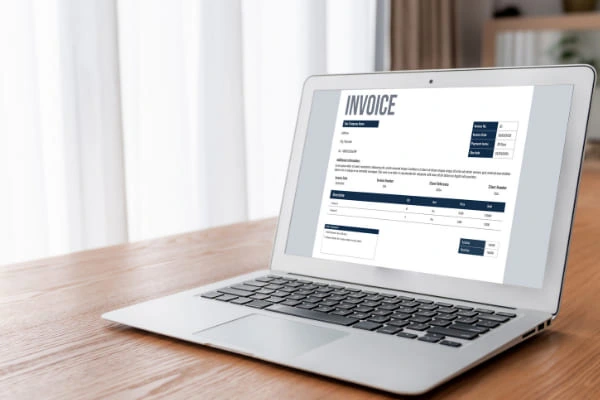
For businesses operating within Europe, compliance is non-negotiable. ClassesBook generates sequential, unique invoice numbers based on the current year (e.g., 0001/2025). Owners can even add their own custom prefixes (like COOP-0001/2025) to distinguish their billing.
Automated Receipts
Clients shouldn’t have to email you asking for a proof of payment. In the ClassesBook user portal, clients can:
- View all past payments (Stripe or offline).
- Download receipts instantly.
- Manage their own class packages.
For more information on the legalities of shared business spaces and tax compliance, you might find the International Co-operative Alliance guidelines on the cooperative business model helpful.
Smarter Scheduling for Shared Spaces
In a co-op gym, space is at a premium. You cannot afford to have a room sit empty because of a manual scheduling error.
ClassesBook uses Class Templates to automate the calendar. You set the rules—time, instructor, capacity, and recurrence—and the system generates the schedule for the next 30 days.
The Smart Waiting Room
If a popular class in your co-op gym reaches capacity, the Waiting Room takes over. It manages the queue based on a “first-in, first-out” logic. If a participant cancels, the system automatically promotes the next person, checks their credits, confirms the booking, and sends an email to both the user and the instructor. This ensures your shared space is always operating at maximum efficiency.
Conclusion: Empower Your Co-op Gym Today
The co-op gym model is the future of the fitness industry, providing freedom for trainers and variety for clients. However, without the right technology, the “co-op” part can quickly become “chaos.”
ClassesBook provides the structural integrity that a collaborative business needs. With its multi-tenant privacy, networking catalogs, referral tracking, and automated invoicing, it allows you to focus on what you do best: training.
Stop fighting with spreadsheets and start growing your community. With ClassesBook, your shared space becomes a streamlined, professional, and highly profitable fitness hub.
Finally, if you wish to give ClassesBook a try, check out our full list of features here!